
Every active trader knows the feeling: the setup looks textbook. The oscillator flags oversold territory, the breakout pattern is clean, and the momentum candle looks strong. You open the position — and within minutes, a sudden reversal wicks out your stop.
What went wrong? You fell into the Single-Perspective Trap.
1. The Blind Spot of Isolated Signals
No single tool — whether it is a moving average, a chart formation, or an isolated indicator — sees the full picture:
- A trend indicator catches momentum, but completely misses drying book liquidity.
- An oscillator signals exhaustion, yet remains blind to an institutional absorption block.
- Human judgment adds emotion, rationalizing a trade driven by FOMO rather than genuine statistical edge.
When market decisions rely on one isolated viewpoint, the probability of walking into a false breakout escalates with every spike in volatility.
2. How Tier-1 Desks Actually Operate
Institutional trading desks rarely allow a single analyst to pull the trigger on major capital allocations in a vacuum. Instead, they rely on a strict consensus mechanism:
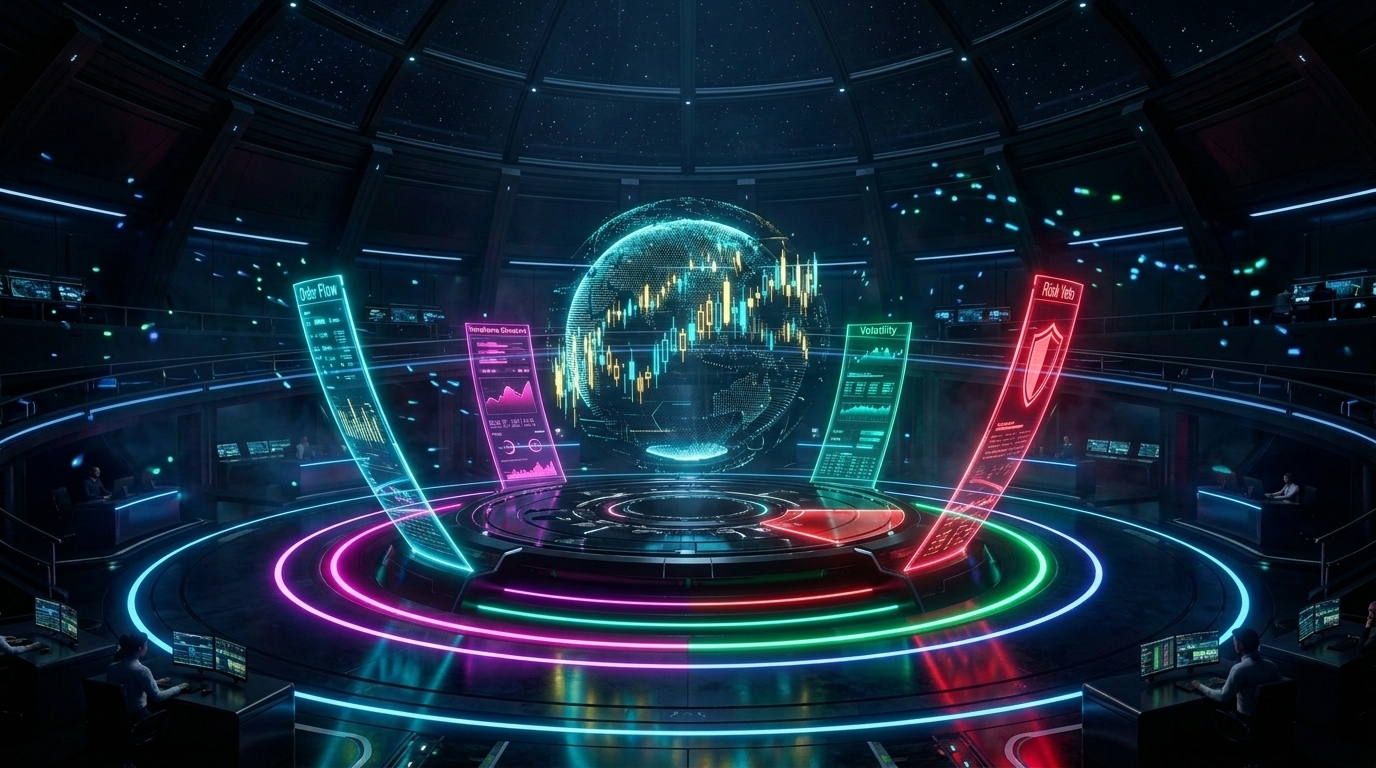
- Separate analysts inspect distinct layers: order flow imbalances, multi-timeframe structure, and volatility profiles.
- If one perspective is bullish but others detect conflicting volume divergences, the trade is vetoed.
- The outcome: Up to 80% of deceptive, low-quality setups are eliminated before capital is ever committed.
3. The FNXT Solution: Autonomous AI Consensus
Inside the FNXT ecosystem, this rigorous multi-perspective check runs continuously in milliseconds:
- Decoupled Specialized Roles: Individual sub-agents analyze isolated dimensions — from structure mapping to liquidity dynamics — completely independently.
- Cross-Model Agreement: A trade setup is never published to your terminal unless independent analytical engines reach definitive consensus.
- Active Noise Filtering: When the market enters chaotic or conflicting regimes, the consensus stack steps aside. In choppy markets, preserving capital is the greatest edge.
You no longer need to juggle twenty conflicting tabs or second-guess whether a breakout is genuine.
Trading is Not a Guessing Game. It’s a Probability Game.
Ready to experience market analytics filtered through cold, emotion-free consensus?